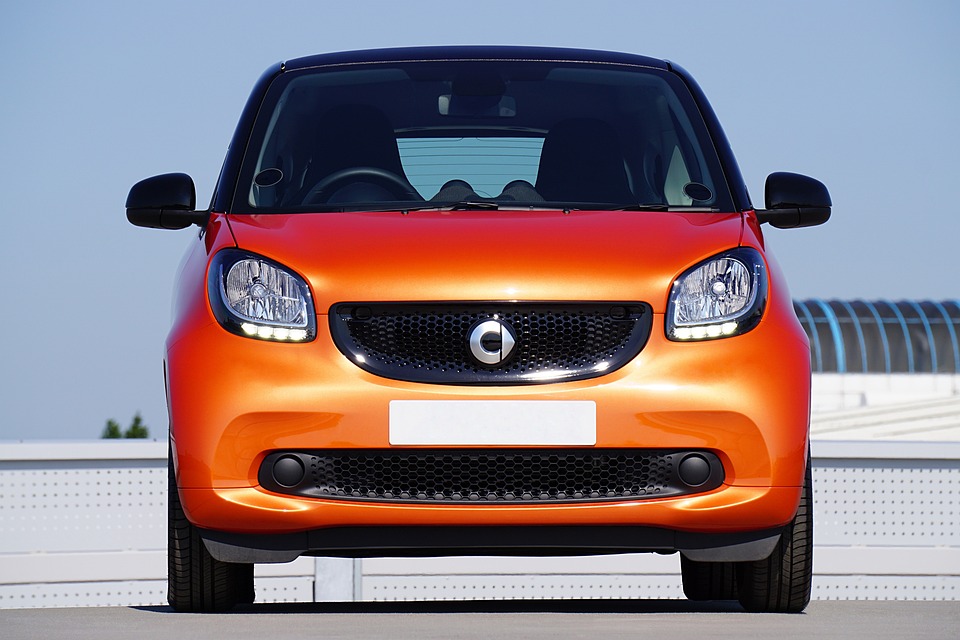
One of the most common questions asked by car buyers is, “Are diesel cars suitable for city driving?” The answer…maybe! In this article, we look at the suitability of cars with diesel engines for urban driving.
A diesel engine generates its power a little differently than a petrol engine, and usually results in better economy and load-carrying ability, albeit with less power and slower response time. This is why buses and trucks are usually diesel powered – they are large, heavy vehicles that carry large loads over long distances. But what about city driving? Does the additional cost of a diesel engine lead to operating cost savings for urban drivers?
Diesel in the city – fuel economy
First, the short trips. Any petrol or diesel engine is very inefficient when it’s cold, so the first 15 minutes or so of any trip will not produce good fuel economy regardless of the car’s advertised fuel economy. So if your commute includes a short commute to work or a trip to the shops, you will get very poor fuel economy whether in a diesel or petrol car.
Second, stop driving. Even after your car’s engine has completely warmed up, it still won’t run efficiently if you’re constantly accelerating, braking, and sitting at traffic lights. And since a diesel engine tends to idle and is a bit slower off the mark than an equivalent petrol engine, but is more powerful once you get up and running, there is a tendency to make your foot harder to get it to respond and then to lift or even brake again to slow down as you start to take off at mile 20+ per hour. This type of driving uses more fuel than smoothly applying the accelerator and brakes. It is certainly possible to drive a diesel engine smoothly, but it takes a little practice and constant expectation. Meanwhile, sitting idling at traffic lights uses fuel regardless of whether it’s petrol or diesel, so you’re simply wasting fuel with both.
Mechanical Problems – Diesel Particulate Filter (DPF)
Very new diesel cars (ie built within the last 4-5 years) come with Diesel Particulate Filter (DPF). This device collects the black soot particles you see belching from older diesel engines, especially when the engine is cold. The DPF stores this soot until the filter unit reaches a certain temperature and then proceeds to burn the soot. It still ends up in the atmosphere, but there are a lot of fine, invisible particles instead of ugly black smoke, and it’s less of a health hazard.
That’s good, right? Well, yes, but… to get the filter trap hot enough to burn off the soot, the engine needs to be running for at least 15-20 minutes, then it takes another 10-15 minutes to burn off the soot and clean the filter. When DPFs were first launched into the automotive world, most people didn’t realize it – including the dealers who sold cars – and thus customers weren’t aware that they had such a device. If the driver does not go regularly (eg – once a week to once every two weeks) on a trip of at least half an hour, the filter trap is clogged. In addition to not properly filtering out diesel soot, persistent or repeated clogging will eventually destroy the filter, requiring an expensive replacement.
So, if your regular use of your car doesn’t require regular driving of 20-30 minutes, you need to take a special trip just to clear your DPF every week or two, which hardly helps your fuel bills. Cars built over the last 2-3 years usually feature better designed DPF tires and improved engine computer controls allowing soot to be burned faster and more efficiently so now it’s less of a problem than before but it’s still a problem for dealers who They have to deal with irate customers who object to paying hundreds of pounds to replace DPF when they weren’t aware of it. This is a bigger problem for used car buyers who are almost certainly not given a proper explanation by the dealership and are therefore more likely to get into trouble.
Poor refueling – filling with the wrong fuel
Another risk is poor fueling, and it happens more often than you think – according to the UK Automobile Association (AA), 150,000 people do this every year, or once every three and a half minutes! Putting diesel fuel into a gasoline engine is very bad news, and putting gasoline into a diesel engine is much worse. When switching from one engine type to another, such as when buying a new car or in a multi-car home, it’s easy to fill the tank with the wrong fuel. Damage due to poor fueling is not usually covered by the warranty, so it could run into thousands of pounds if the engine is damaged. Even if you don’t wreck your engine, it’s still expensive and time consuming to tow the car away, dry it, and clean it before you can drive it again. This is not a problem with diesel engines In itselfbut if you’re thinking of switching from a petrol car or already have another petrol car at home, it’s worth mentioning.
summary
All of the above suggests that buying a diesel car primarily for city driving is not a great idea. However, it also depends on the total mileage you’ve traveled and the amount of load (passengers, luggage, trailers, etc.) you’re putting on the vehicle. The very broad advice usually given around the industry is that annual mileage of more than 10,000 miles per year over 3 years is close to the threshold for choosing a diesel car over a comparable petrol car. However, it also depends on what kind of car you’re looking for, how long you plan to keep it, what kind of deals you can get on one or the other, etc.